 How-to
What to Expect From Hair Restoration: A Complete Guide
Table of Contents
- Understanding Hair Restoration and Your Candidacy
- What Happens During a Hair Restoration Consultation
- Hair Restoration Treatment Options and Techniques
- What Happens on Procedure Day
- Hair Restoration Recovery: Timeline and What to Expect
- Hair Restoration Results Timeline and Long-Term Expectations
- When to Contact Your Provider and Warning Signs
- Frequently Asked Questions
Last Updated: October 15, 2026
Understanding Hair Restoration and Your Candidacy
Hair restoration transplants healthy hair follicles to areas of thinning or baldness. At Leon NP Family Health Care, PLLC, we know hair loss affects confidence and quality of life, so we offer personalized consultations.
Who Is a Suitable Candidate
Not everyone is a good candidate for hair restoration, which we assess during your consultation. Generally, good candidates have stable hair loss patterns and sufficient donor hair.
You may be a suitable candidate if you:
- Have experienced hair loss for at least several years
- Have enough healthy hair in donor areas (typically the back and sides of the scalp)
- Are in good overall health
- Have realistic expectations about results and timelines
People with certain medical conditions, active scalp infections, or unrealistic expectations may not be ideal candidates. We'll evaluate your situation at your consultation.
What Happens During a Hair Restoration Consultation
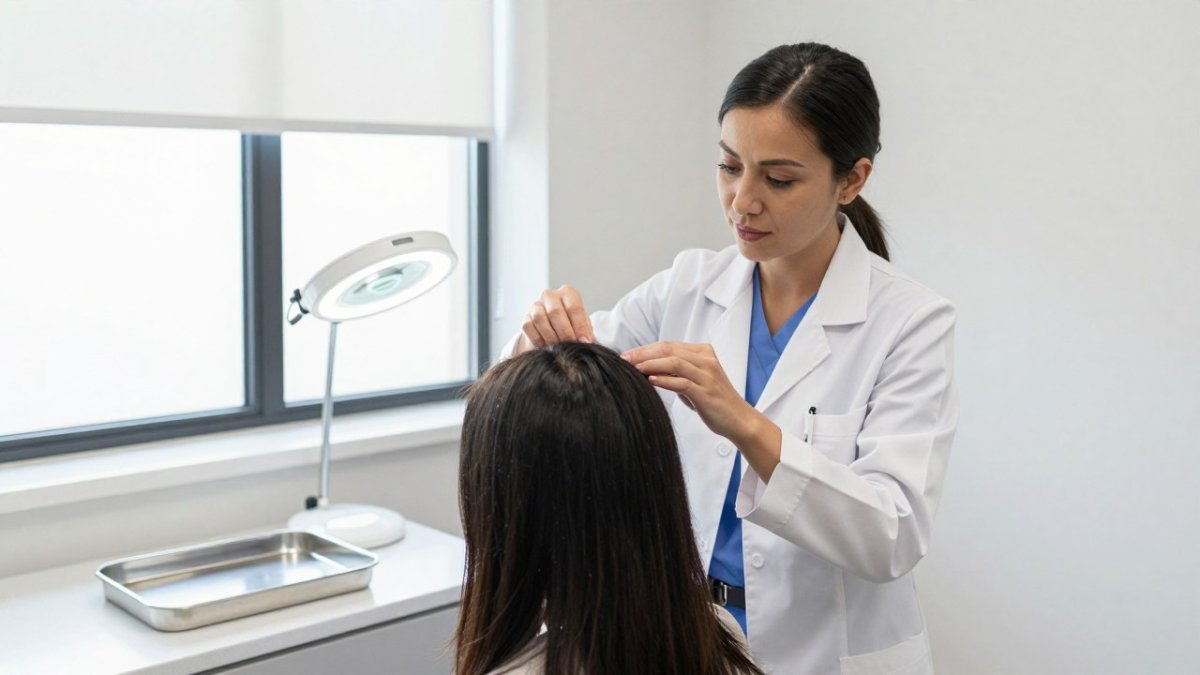
Your consultation is where we review your hair loss history, assess your scalp, and discuss which hair restoration techniques suit you.
During the visit, we'll:
- Review your medical history and current medications
- Examine your scalp and assess the extent of hair loss
- Evaluate the quality and quantity of donor hair available
- Discuss your goals and expectations
We listen to your concerns about pain, scarring, or natural-looking results, show you examples, and explain recovery.
Hair Restoration Treatment Options and Techniques
The right choice of hair restoration technique depends on your hair loss pattern, donor hair availability, and preferences.
Follicular Unit Extraction (FUE)
Follicular unit extraction is a minimally invasive hair restoration technique where individual follicles are removed from the donor area with a small punch tool and placed into thinning or bald recipient areas.
FUE is popular for minimal scarring and faster recovery, though it is time-intensive because each follicle is extracted individually.
Benefits of FUE include:
- Minimal linear scarring in the donor area
- Shorter recovery time for most people
- Ability to wear shorter hairstyles without visible scarring
- Precise placement of individual grafts
Follicular Unit Transplantation (FUT)
Follicular unit transplantation removes a thin strip of scalp from the donor area, dissects it under magnification to extract individual grafts, and implants them into the recipient area.
FUT has been used successfully for many years and allows extraction of many grafts in one session.
Advantages of FUT include:
- Ability to harvest many grafts in one session
- Efficient use of donor hair
- Well-established track record of success
- Potentially shorter operating time than FUE
The trade-off is a linear scar in the donor area, typically hidden by surrounding hair.
What Happens on Procedure Day
On procedure day, arrive early so our team can prepare you and answer last-minute questions. The procedure typically takes several hours, depending on graft count.
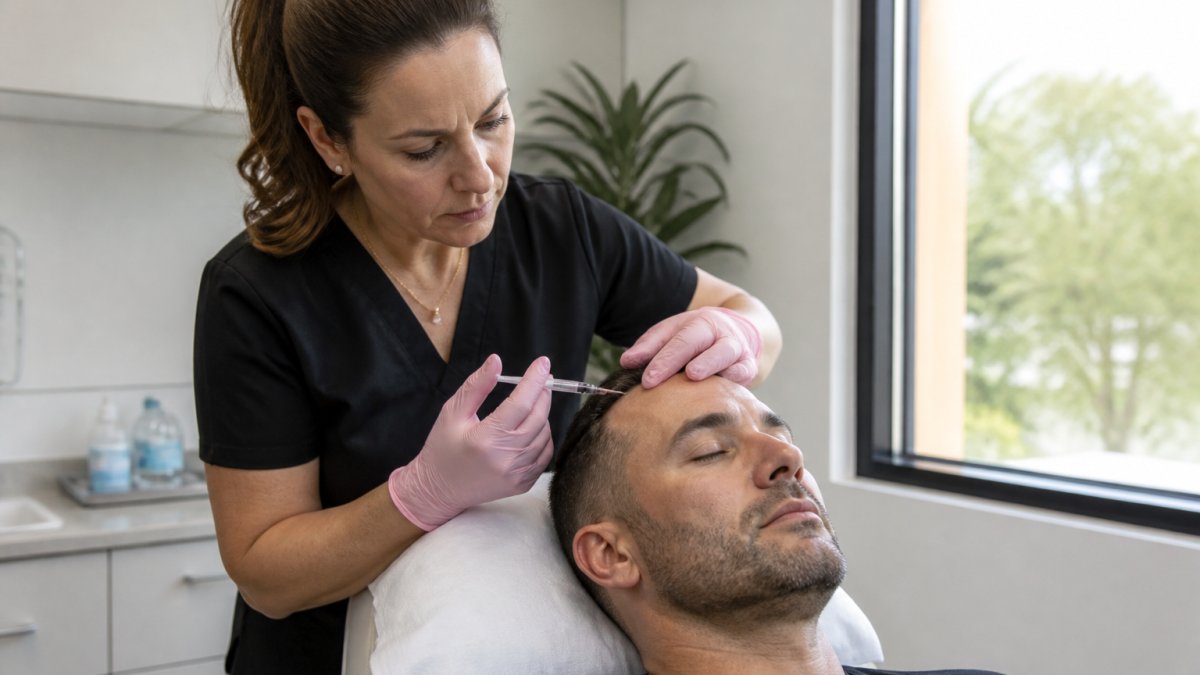
Here's what to expect:
- Check-in and preparation: You'll change into a surgical gown and our team will mark the recipient and donor areas on your scalp
- Local anesthesia: We'll administer local anesthesia to numb both the donor and recipient areas. You'll feel pressure and vibration but not pain
- Graft extraction: We'll carefully remove hair follicles from the donor area
- Graft preparation: Our surgical team will prepare and sort the grafts under magnification
You'll be awake but comfortable, and our team will check on you regularly.
Hair Restoration Recovery: Timeline and What to Expect
Recovery from hair restoration is gradual, and the timeline varies by technique, graft count, healing response, and aftercare compliance.
Higher graft counts mean more swelling and crusting.
Days 1-7: Immediate Aftercare Checklist
The first week is critical for protecting new grafts. Your scalp will feel tender, with swelling, redness, and small crusts.
Use this day-by-day checklist as a practical guide:
- Day 1: Rest at home. Keep your head elevated on 2-3 pillows. Apply any prescribed ointment or saline spray to the donor and recipient areas as directed. Do not wash your hair. Take prescribed pain medication before discomfort peaks.
- Day 2: Continue elevation and medication. Expect swelling to begin appearing on the forehead or around the eyes. Apply cold compresses to the forehead (never directly on the grafts) for 15 minutes at a time.
- Day 3: Swelling typically peaks around days 3-5. Sleep upright. Begin gentle washing only if your clinician has approved it, using lukewarm water and a mild, fragrance-free shampoo, patting rather than rubbing.
- Day 4: Continue gentle washing. Crusts will begin to loosen. Do not pick or scratch. Itching is common and usually signals healing.
Weeks 2-4: Early Recovery Milestones
By week two, most visible swelling has resolved, but grafts are still establishing themselves, so continued caution is important.
During weeks 2-4:
- Gradually resume light activities and return to work if your job doesn't involve heavy physical labor
- Continue to avoid direct sun exposure on the scalp; wear a loose hat or use approved sun protection once cleared
- Begin gentle hair washing with lukewarm water and mild shampoo if you haven't already
- Avoid chlorinated pools and saltwater for at least two weeks
By week 4, most patients feel significantly better and the scalp looks nearly normal, though some redness may persist.
Months 2-6: Shedding and Regrowth
Around month 2 or 3, transplanted hair sheds as it enters a resting phase before new growth begins. This is normal and a natural part of the hair restoration process, though it can be emotionally challenging.
During this phase:
- Transplanted hairs will shed, but the follicles remain intact
- New hair growth typically begins around month 3-4
- Initial growth may appear thin or wispy
- The donor area will have fully healed with minimal scarring
By month 6, you should see noticeable new growth in the recipient area, which will continue to thicken.
Technique-Specific Recovery Differences
- Graft count and session length: Larger sessions tend to produce more swelling and crusting, so plan for a slightly slower first week if your graft count is high.
Scalp laxity, hair caliber, overall health, smoking status, and aftercare consistency all influence healing speed and comfort.
Emotional Expectations During Shedding and Slow Growth
Shock loss and uneven early growth are common sources of anxiety after hair restoration. Knowing what to expect helps:
- It is normal to feel discouraged when transplanted hair sheds around month 2-3. The follicles are still alive and preparing for new growth.
- Early growth often appears patchy or wispy before it thickens. This is not a sign of failure.
- Comparing your progress to online photos taken under different lighting, at different angles, or at different stages can distort your perception.
- Many patients find it helpful to take standardized photos every 4-6 weeks in the same lighting and position to track real progress.
Long-Term Maintenance Planning
Transplanted hair is typically resistant to genetic hair loss, but it does not stop ongoing loss in untreated areas:
- Native hair in the recipient area and elsewhere on the scalp may continue to thin over time.
- Some patients choose a maintenance plan, such as medication or other therapies, to slow further loss of native hair.
- Follow-up visits allow your clinician to monitor density, assess donor-area healing, and plan any future sessions if needed.
- Final results are typically assessed around the 12-month mark, though improvement may continue up to 18 months.
Hair Restoration Results Timeline and Long-Term Expectations
Patience is essential with hair restoration results, which unfold gradually over many months.
Most patients see significant results by 9-12 months, with transplanted hair continuing to thicken for up to 18 months.
What you can realistically expect:
- Months 1-3: Grafts establish themselves; transplanted hair sheds
- Months 3-6: New hair growth begins; initial results visible
- Months 6-12: Noticeable improvement in hair density and coverage
- Months 12-18: Final results as transplanted hair reaches full thickness and length
Density and appearance depend on graft count, donor hair quality, and aftercare.
However, hair restoration doesn't stop natural hair loss in untreated areas, and some patients choose additional procedures later.
When to Contact Your Provider and Warning Signs
While most hair restoration recoveries proceed smoothly, knowing which symptoms are expected and which may indicate complications helps you act quickly.
Expected Symptoms (No Need to Panic)
These are normal parts of healing and usually resolve on their own:
- Mild to moderate swelling on the forehead or around the eyes that peaks around days 3-5 and then improves
- Small crusts around each graft that loosen and shed over the first 1-2 weeks
- Itching as the scalp heals; resist scratching, but know that itching itself is not a warning sign
- Numbness or tingling in the donor area that gradually fades over weeks
Warning Signs That Need Prompt Attention
Contact our team at Leon NP Family Health Care, PLLC if you experience any of the following:
- Excessive bleeding or oozing that doesn't stop with gentle pressure
- Signs of infection, including increasing redness, warmth, pus, or fever
- Severe pain that doesn't improve with prescribed medication
- Allergic reactions such as rash, hives, or difficulty breathing
How and When to Reach Out
- During business hours: Call the office directly. Describe your symptoms, when they started, and whether they are getting better or worse. Photos taken in good lighting can help our team assess the situation before you come in.
- After hours or on weekends: Follow the after-hours instructions provided in your post-operative packet. If you are experiencing difficulty breathing, chest pain, or another emergency, call 911 or go to the nearest emergency room.
- Within the first 24-48 hours: Report any bleeding that won't stop, a fever above 100.4°F, or sudden severe pain.
- Within the first week: Report increasing redness, pus, or swelling that is worsening instead of improving.
What to Have Ready When You Call
To help our team respond quickly, have this ready:
- Your procedure date and technique (FUE or FUT)
- Approximate graft count, if known
- A list of medications you are currently taking, including pain relievers and antibiotics
- Your temperature, if you have a fever
Most issues are rare, but early intervention makes a difference. Our team supports you throughout recovery.
Frequently Asked Questions
Is hair restoration painful?
Hair restoration procedures use local anesthesia to numb the scalp, so you should not feel pain during the procedure itself. You may feel pressure or vibration, but not sharp pain. After the procedure, some patients experience mild discomfort or soreness, which can typically be managed with over-the-counter pain relief as recommended by your provider. During your hair restoration consultation, discuss pain management options and what sensations to expect.
How long does it take to see results from hair restoration?
Hair restoration results develop gradually. Most patients begin seeing new hair growth around 3-4 months after the procedure, with continued improvement through 6-9 months. Full, visible results typically appear around 12-18 months as transplanted hair follicles establish themselves and hair density increases. The hair restoration results timeline varies by individual factors including age, overall health, and the technique used. Your provider can discuss realistic expectations during your consultation.
What should I expect during the recovery period after hair restoration?
Hair restoration recovery involves several phases. The first week includes swelling, crusting, and scabs on both donor and recipient areas. Weeks 2-4 involve continued healing and gradual scab removal. Around weeks 2-6, you may experience temporary hair shedding, which is normal. Most patients can return to light activities within 1-2 weeks and normal exercise after 3-4 weeks. Specific hair restoration recovery timelines depend on individual healing rates. Your provider will give detailed aftercare instructions.
Can hair restoration stop hair loss from continuing?
Hair restoration moves healthy hair follicles to areas where hair is thinning or missing, restoring density in those spots. However, it does not stop ongoing hair loss in untreated areas. If you have progressive hair loss, your provider may recommend discussing long-term hair loss management during your consultation to address both restoration and prevention strategies for maintaining your results over time.