 How-to
PRP Hair Restoration for Men: A Step-by-Step Guide
Table of Contents
- What Is PRP Hair Restoration and How It Works
- Male Pattern Baldness and Who Benefits from PRP
- How Many PRP Sessions for Hair Loss: Treatment Timeline
- The PRP Hair Restoration Procedure: What to Expect
- PRP Hair Treatment Results for Men: What Research Shows
- PRP Hair Restoration Cost and Value Comparison
- PRP vs. Hair Transplant for Men: Which Is Right for You
- Preparing for PRP and Managing Side Effects
- Frequently Asked Questions
Last Updated: October 7, 2026
What Is PRP Hair Restoration and How It Works
Platelet-rich plasma (PRP) hair restoration for men uses a concentration of your own blood platelets to stimulate dormant hair follicles and encourage natural hair growth.
The process delivers growth factors, proteins that support cell repair and regeneration, directly to hair follicles. These growth factors are thought to reactivate follicles that have shrunk due to male pattern baldness, a condition called follicle miniaturization.
Understanding platelet-rich plasma
Platelets are blood cells that naturally contain healing compounds. When concentrated, they contain 5-10 times more growth factors than regular blood, including proteins that promote cell growth, reduce inflammation, and improve blood flow to the scalp.
The preparation takes about 15 minutes. A technician spins your blood in a centrifuge to separate the platelets from other components, producing a golden-yellow liquid rich in concentrated platelets and growth factors: the PRP injected into your scalp.
How PRP targets hair loss and follicle stimulation
Male pattern baldness happens when hair follicles shrink in response to a hormone called DHT (Cause of Androgenic Alopecia: Crux of the Matter). Over time, these miniaturized follicles produce thinner, shorter hairs until they stop growing.
PRP injections deliver growth factors directly to these dormant follicles. The theory is that these growth factors can:
- Reduce inflammation around the follicle
- Improve blood flow to the scalp
- Stimulate follicle cells to enter an active growth phase
- Strengthen the hair shaft and extend the growth cycle
PRP works best on follicles that are still present but inactive, not on areas where follicles have permanently disappeared.
Male Pattern Baldness and Who Benefits from PRP
Male pattern baldness, or androgenetic alopecia, is the most common cause of hair loss in men, resulting from genetics and sensitivity to DHT.
PRP hair restoration for men is most effective for men in the early to moderate stages of hair loss. The earlier you start treatment, the better your chances of slowing or reversing thinning.
Early-stage hair loss and candidacy
The best candidates are men who notice thinning or a receding hairline but still have visible hair in the affected areas.
Signs you might be a good candidate:
- Noticeable hair thinning over the past 1-3 years
- Receding hairline or widening part
- Hair loss that started recently
- Hair that's becoming thinner but still visible
- No previous hair transplant in the treatment area
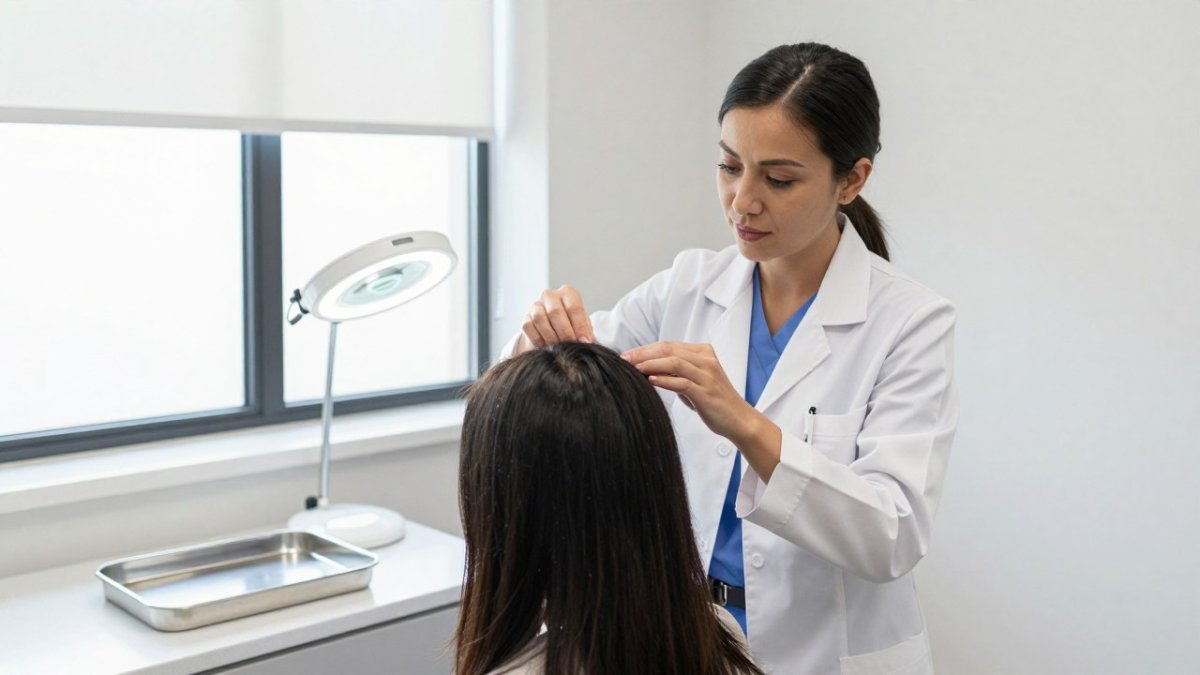
A consultation with a qualified provider can determine if your hair loss pattern and stage make you suitable. They'll assess your scalp, review your history, and discuss your goals.
When PRP is less likely to help
PRP has limitations. Men with advanced hair loss, where the scalp is completely bald, won't benefit because there are no follicles left to stimulate.
If you've been losing hair for 10+ years, your follicles may be permanently damaged. Men over 50 sometimes see slower results than younger men.
How Many PRP Sessions for Hair Loss: Treatment Timeline
Most men need multiple PRP sessions for meaningful results: an initial series followed by maintenance injections.
Initial treatment series and spacing
The standard protocol is 3 sessions spaced 4-6 weeks apart; some providers start with monthly sessions for 3 months, then space them further apart.
Here's what a typical timeline looks like:
| Phase | Timeline | What Happens |
|---|---|---|
| Initial Series | Months 1-3 | Three PRP injections, 4-6 weeks apart |
| Observation | Months 4-6 | Hair growth cycle begins; you may not see results yet |
| Early Results | Months 6-9 | Some men notice thicker hair or slower shedding |
| Full Results | Months 9-12 | Maximum improvement typically visible by month 12 |
Hair growth takes time. Even if PRP stimulates a follicle immediately, new hair takes 3-6 months to grow long enough to notice.
Maintenance sessions and long-term management
After your initial 3 sessions, most men benefit from maintenance injections every 6-12 months to sustain results.
Without maintenance, PRP's effects tend to fade.
Long-term management often combines PRP with other treatments. Many men use PRP alongside medications like finasteride or minoxidil to maximize hair retention and growth.
The PRP Hair Restoration Procedure: What to Expect
The PRP hair restoration for men procedure is straightforward and done in an office setting. Most appointments take 45-60 minutes from start to finish.
Blood draw and plasma preparation
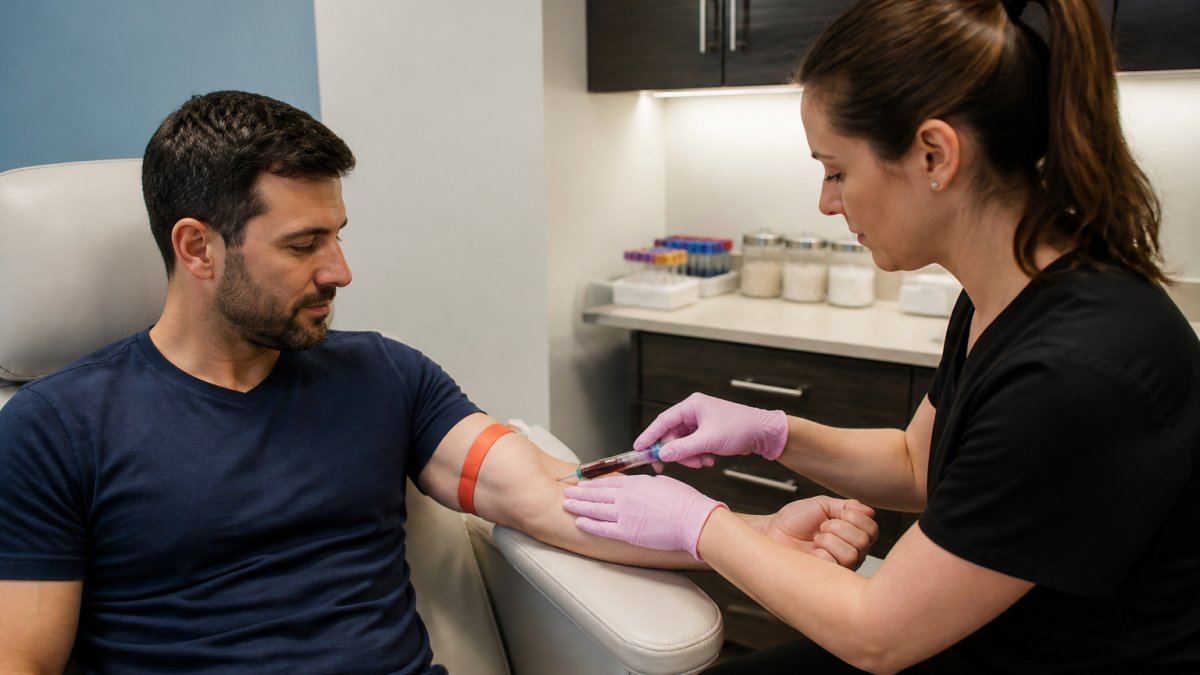
The procedure starts with a simple blood draw, usually 30-60 milliliters (about 2-4 tablespoons).
The centrifuge process takes about 15 minutes: heavier red blood cells settle at the bottom while platelets and plasma rise to the top.
Scalp injections and post-treatment care
Once your PRP is ready, a provider numbs your scalp with a topical anesthetic for 10-15 minutes.
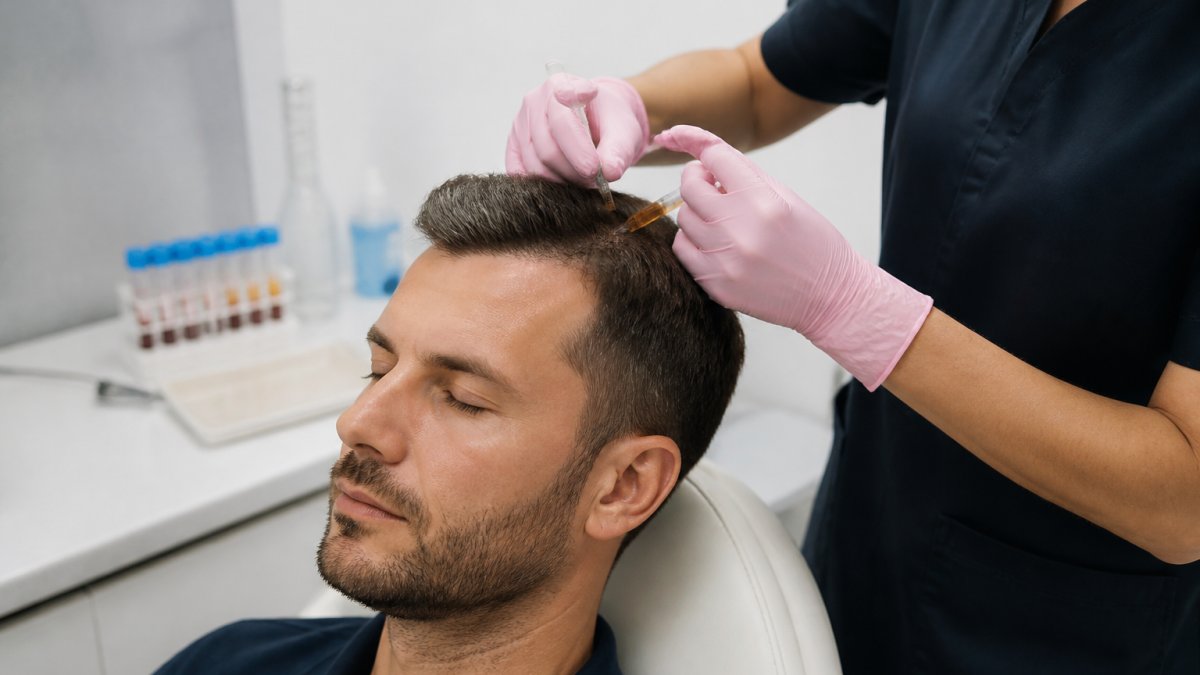
The provider injects PRP across the areas of hair loss using a fine needle, spaced evenly for coverage.
After injections, your scalp may feel tender or slightly swollen.
Post-treatment care includes:
- Avoid washing your hair for 24-48 hours
- Skip strenuous exercise for 48 hours
- Don't use hot water on your scalp for 3 days
- Avoid direct sunlight for 48 hours
- Don't use harsh hair products for one week
- Sleep with your head elevated for the first night
Most men return to normal activities the next day.
PRP Hair Treatment Results for Men: What Research Shows
Results from PRP hair restoration for men vary: some men see noticeable improvement, others modest changes, and a few little to no benefit.
Hair density and regrowth outcomes
Studies on PRP show mixed but generally positive results. Many men experience increased hair density and slower shedding; some report thicker hair shafts and improved quality.
The most consistent finding is that PRP tends to slow or stop further hair loss. Actual regrowth, new hairs appearing in previously bald areas, is less common but does happen, especially in men with early-stage hair loss.
Results depend heavily on:
- How early you start treatment
- Your genetics and how your follicles respond
- Whether you combine PRP with other treatments
- How consistently you do maintenance sessions
Timeline for visible improvement
Most men don't see dramatic changes immediately. You're unlikely to notice results before month 3 or 4, and many see the most improvement between months 6 and 12.
If you're going to respond well to PRP, you'll typically see some sign by month 6.
Evidence quality and realistic expectations
The evidence supporting PRP is promising but not definitive. Many studies show positive results, but sample sizes are often small and designs vary; more large-scale research is needed to understand which men benefit most and why.
Realistic expectations matter. PRP is not a cure for male pattern baldness; it's a tool to slow hair loss and potentially regrow some hair in early-stage cases, best used as part of a comprehensive approach that may include medications, scalp care, and lifestyle factors.
PRP Hair Restoration Cost and Value Comparison
PRP pricing depends on your treatment plan and provider, varying by location, provider experience, and how much PRP you need.
What affects pricing for PRP treatment
The main cost drivers are:
- Number of sessions (initial series typically requires 3 sessions)
- Provider expertise and location
- Facility overhead and equipment
- Whether you need follow-up or maintenance sessions
- Whether PRP is combined with other treatments
For specific pricing, we recommend contacting our office directly for a personalized quote. Our team can assess your hair loss and discuss treatment options that fit your goals and budget.
Comparing value: PRP versus other options
PRP is one of several options for treating male pattern baldness.
Medications (finasteride, minoxidil) are typically the cheapest option upfront.
Hair transplants are more expensive initially but permanent.
PRP falls in the middle. It's more expensive than medications but less costly than transplants.
Many men use a combination approach: PRP plus medications, or PRP followed by transplant if needed.
PRP vs. Hair Transplant for Men: Which Is Right for You
Both PRP and hair transplants address male pattern baldness, but they work differently and suit different situations.
How the approaches differ
PRP hair restoration for men stimulates existing follicles to grow thicker and stronger.
Hair transplants move healthy hair follicles from areas of your scalp that are resistant to hair loss (usually the back) to thinning areas.
PRP is better if you want to avoid surgery, prefer a gradual approach, or have early-stage hair loss with many follicles still present.
Combination therapy and treatment planning
Many men benefit from combining both approaches. You might start with PRP to slow hair loss and regrow some hair, then later pursue a transplant if needed.
A qualified provider can help you decide. We offer personalized evaluation and treatment plans. We listen to your concerns and create a strategy that matches your goals, timeline, and budget.
Preparing for PRP and Managing Side Effects
Preparing properly for your PRP treatment increases your chances of good results and minimizes discomfort.
Pre-treatment preparation steps
In the week before your appointment:
- Avoid blood-thinning medications if possible (consult your doctor first)
- Stop taking aspirin or NSAIDs like ibuprofen for 3-5 days before treatment
- Stay hydrated, drink plenty of water
- Get adequate sleep
- Avoid alcohol for 24 hours before treatment
- Eat a healthy meal before your appointment
- Wash your hair the morning of treatment
On the day of treatment, wear comfortable clothing and plan to relax afterward. Avoid scheduling important events or stressful activities for the rest of the day.
Aftercare and what to avoid
The first 48 hours are critical. Your scalp is healing and the PRP is working. Protect it:
- Don't wash your hair for 48 hours
- Avoid hot water, steam, and saunas for 3 days
- Skip intense exercise for 48 hours
- Don't apply hair products, dyes, or treatments for one week
- Avoid direct sunlight for 48 hours
- Don't scratch or massage your scalp
- Sleep with your head elevated
Most side effects are mild and temporary. Slight redness, swelling, or tenderness at injection sites typically resolve within 24-48 hours.
Male pattern baldness doesn't have to mean accepting permanent hair loss. PRP hair restoration for men offers a biological approach to stimulate your own follicles and slow or reverse thinning.
Frequently Asked Questions
How many PRP sessions are typically needed for hair loss?
Most men benefit from an initial series of 3 to 4 PRP sessions spaced 4 to 6 weeks apart. After the initial series, maintenance sessions are often recommended every 6 to 12 months to sustain results. Your specific treatment plan depends on your degree of hair loss, response to treatment, and the assessment of your healthcare provider during your medical evaluation.
How long does it take to see results from PRP hair restoration?
Visible hair growth typically takes 3 to 6 months to appear, as hair follicles respond gradually to the growth factors in platelet-rich plasma. Some men notice reduced hair fall within weeks, while fuller density improvements may take 6 to 12 months. Results vary based on the extent of hair loss, how early you begin treatment, and your individual response to the injections.
Does PRP actually work for hair loss in men?
PRP shows promise for slowing hair loss and promoting regrowth, particularly in early-stage male pattern baldness. Research indicates that platelet-rich plasma can stimulate dormant hair follicles and improve hair density in responsive candidates. However, results are not guaranteed, and effectiveness depends on the severity of hair loss, the quality of the PRP preparation, and individual biological factors. A qualified healthcare provider can assess whether you are likely to benefit.
Can PRP be combined with other treatments for male pattern hair loss?
Yes, PRP can be used alongside medications like finasteride or dutasteride, or in combination with other hair restoration approaches. Some men combine PRP with topical treatments or plan for a hair transplant after PRP therapy. Combination therapy often improves outcomes compared to a single treatment alone. Your provider can design a personalized treatment plan that combines therapies based on your hair loss pattern and goals.