 blog
Why Hair Thinning Deserves a Longer Medical Visit
Last Updated: November 10, 2026
Quick Summary
Hair thinning often has several overlapping causes, including hormonal changes, thyroid problems, low iron or vitamin D, and stress-related shedding. A thorough evaluation needs time for your health history, a scalp exam, and targeted labs, so the cause can be identified before treatment begins.
- Health history is where many diagnostic clues are found, so expect detailed questions.
- Recent illness, surgery, or major stress can trigger shedding about 2 to 3 months later.
- A scalp exam compares density at the part line, hairline, and crown to find the pattern.
- Labs are ordered when the cause is unclear, often thyroid, ferritin, vitamin D, or hormones.
- Telehealth can cover history, but an in-person visit is needed for the scalp exam.
Table of Contents
- Why Hair Thinning Needs More Than a Quick Look
- Hair Loss Causes in Women: What a Full Evaluation Explores
- What Kind of Doctor to See for Hair Loss as a Woman
- What a Longer Medical Hair-Loss Evaluation Includes
- Questions to Ask About Hair Loss Treatment
- Patient-Provider Communication: A Checklist for Your Visit
- Booking Your Hair Loss Evaluation in Smithtown
- Frequently Asked Questions
Why Hair Thinning Needs More Than a Quick Look
If you have noticed more hair in the shower drain or a wider part than you used to, you are not alone.
Many people leave a short appointment without a clear explanation, which can be frustrating. Our comprehensive weight loss program explains what a full medical evaluation includes.
Your experience matters here. Hair thinning can be stressful, and feeling heard is part of good care.
Hair Loss Causes in Women: What a Full Evaluation Explores
Hair loss in women has many possible causes, and several can overlap. A complete evaluation looks for the most likely drivers before deciding what, if anything, needs treatment. Many of these causes are treatable or manageable once they are identified.
Common categories include hormonal shifts, nutritional gaps, thyroid changes, medication effects and stress-related shedding. Some types of hair loss are temporary, while others are chronic and need ongoing care.
Hormonal and menopause-related changes
Hormone changes are a frequent contributor to thinning, especially during perimenopause and menopause. Our perimenopause wellness guide covers evidence-based hormone support and symptom relief.
Hormonal hair thinning may also occur with polycystic ovary syndrome (PCOS), which can raise androgen levels. A provider may ask about your menstrual cycle, acne, facial hair and weight changes, since these details can point toward a hormonal cause.
Thyroid, nutritional, and stress-related shedding
An underactive or overactive thyroid can disrupt the hair growth cycle, and it is commonly checked during a hair loss evaluation. Fatigue, weight changes and feeling unusually cold or hot can accompany thyroid concerns, so mention these symptoms even if they seem unrelated.
Low iron, ferritin, vitamin D or other nutrient levels can also contribute to shedding. Restrictive dieting, heavy menstrual bleeding and vegetarian or vegan eating patterns can increase the risk of low stores.
What Kind of Doctor to See for Hair Loss as a Woman
Many women are unsure where to start.
When you are looking for a provider, consider whether they take time to explain findings, discuss options openly and follow up on your progress.
If you have a sudden, rapid or patchy loss, scalp pain, redness or scarring, prompt medical attention is important. Those symptoms can signal a condition that needs timely diagnosis.
What a Longer Medical Hair-Loss Evaluation Includes
A longer visit is not just a longer conversation, it is a different structure. A rushed appointment tends to jump straight to a diagnosis and a prescription. A thorough evaluation builds the diagnosis in layers: history first, then a hands-on scalp and hair assessment, then targeted lab work, then a plan that ties the findings together. Our guide on what to expect from hair restoration outlines the consultation, treatment options and recovery timeline.

Health history: the part that takes the most time
A provider will typically walk through your history in detail, and this is where many diagnostic clues are found. Expect questions about:
- When you first noticed the change, and whether it was gradual or sudden
- Whether the shedding is diffuse (all over) or patterned (part line, crown, temples)
- Your menstrual cycle, pregnancy history, postpartum timing and menopause status
- Recent illness, surgery, high fever or major emotional stress in the past 3 to 6 months
- Medications, including birth control, thyroid medication, blood pressure drugs and antidepressants
- Supplements, protein intake, restrictive dieting and any history of disordered eating
That list is long on purpose. Telogen effluvium, for example, typically shows up about 2 to 3 months after the trigger, so a provider who does not ask about events from months earlier may miss it entirely. Postpartum shedding follows a similar delayed pattern. Hormonal thinning from perimenopause or PCOS often shows a slow, patterned change rather than a sudden shed, and the history is what separates the two.
Scalp and hair examination: what your provider is actually looking for
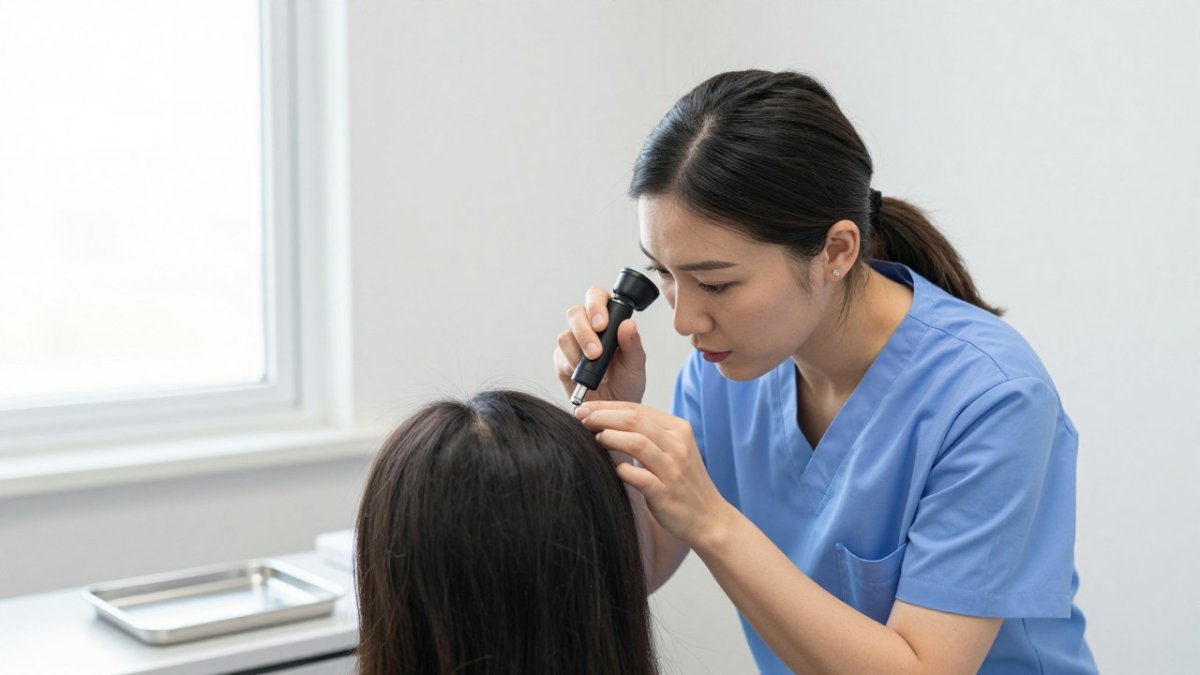
A scalp exam is more than a quick look. A scalp exam typically assesses hair density along the part line, the frontal hairline and the crown, and compares those areas to each other.
A simple pull test, gently tugging a small section of hair to see how many strands come loose, can help estimate how active the shedding is at that moment.
If you wash and style your hair the morning of an appointment, mention it to your clinician.
Lab testing: targeted, not automatic
Blood tests are not needed for every patient, but they are commonly considered when the cause is unclear or when symptoms point toward an underlying condition. Tests a provider may order include:
- Thyroid function (TSH, and sometimes free T4)
- Ferritin and iron studies, especially with heavy periods or a vegetarian diet
- Vitamin D
- Complete blood count to check for anemia
- Hormone panels when cycle changes, acne or facial hair suggest a hormonal cause
- Additional testing when symptoms point elsewhere, such as blood sugar or other metabolic markers
A clinician can explain which tests are relevant and what each result can and cannot tell you. A single lab value should generally be interpreted in context rather than in isolation.
Putting the findings together
The last piece of a thorough evaluation is synthesis. A clinician should be able to explain what the history, exam and labs suggest together, which causes are most likely, which have been ruled out, and what the next step is.
A thorough evaluation builds the diagnosis in layers, and each stage takes time. The table below summarises what each part covers.
| Evaluation step | What it covers | Why it matters |
|---|---|---|
| Health history | Onset, pattern, cycle, medications, stress events | Clues separate hormonal from shedding causes |
| Scalp and hair exam | Density, miniaturized hairs, scalp skin | Shows whether shedding is patterned or uniform |
| Pull test | Strands released from a small section | Estimates how active shedding is right now |
| Targeted labs | Thyroid, ferritin, vitamin D, CBC, hormones | Ordered when cause is unclear or symptoms point to it |
| Telehealth history | Medications, menstrual and family history | Can be done by video, but not scalp exam |
Questions to Ask About Hair Loss Treatment
Before starting any treatment, it helps to ask clear questions. Our PRP hair restoration treatment process explains each step, recovery time and who may be a candidate. Understanding the goals, timeline and expected results can make it easier to decide what fits your needs.
Consider asking:
- What is the most likely cause of my hair thinning, and how confident are you in that assessment?
- Which tests do I need, and what will the results tell us?
- What treatment options are appropriate for my situation, and who are they best suited for?
- How long should I expect before I see changes, and what does progress look like?
- What side effects or risks should I know about?
- Are there lifestyle or nutritional changes that may help?
Writing your questions down before the visit can help you cover everything. You are welcome to bring a family member or friend for support.
Patient-Provider Communication: A Checklist for Your Visit
Good communication is one of the most important parts of care, and it is also the part patients have the most control over. These steps can help you get the most from your appointment:
- Write down your main concerns and when they started
- List all medications, vitamins and supplements you take
- Note recent life changes, such as pregnancy, illness, surgery or major stress
- Bring photos of your hair from several months ago, if you have them
- Ask your provider to explain any term you do not understand
- Confirm what happens next, including tests, follow-up timing and who to call with questions
How to tell whether your provider is really listening
Most patients leave a rushed visit feeling unsure but unable to say exactly why. A few signals can help you judge whether the visit was attentive. Did your provider ask follow-up questions about your history, or did they move to a diagnosis after one or two answers?
Attentive clinicians often reflect your concerns back to you, distinguish between what is known and what is still uncertain, and give you a chance to ask questions before the visit ends.
Telehealth versus in-person: what each can and cannot do
Telehealth visits can be useful for the history portion of a hair-loss evaluation. Reviewing medications, menstrual history, stress events and family history can be done well by video, and it can save you a trip.
A common pattern is a hybrid approach: a telehealth visit to gather history and discuss whether labs are appropriate, followed by an in-person visit for the scalp exam and any testing that requires it.
Preparing for the conversation itself
It helps to decide in advance what you want to leave the visit with. Many patients want three things: a likely explanation, a plan, and a sense of what to watch for. Write those three questions down.
If you are taking multiple supplements or a hair, skin and nails product, bring the actual bottles or a photo of the labels. 'Biotin' and 'collagen' products vary widely, and some ingredients can affect lab results, so your provider needs the specific product, not just the category.
Booking Your Hair Loss Evaluation in Smithtown
If you are in Smithtown, Greenlawn or the surrounding Long Island communities and want a longer, more detailed visit, Leon NP Family Health Care, PLLC provides medical evaluations for hair loss. Learn how a preventative wellness visit is structured and prepared for before you book.
To learn more about what to expect or to schedule a consultation, visit our website or contact our office. A consultation is a chance to talk through your symptoms with a qualified provider and decide on appropriate next steps.
Frequently Asked Questions
Who is the best professional to see about hair loss?
A medical evaluation usually starts with a primary care clinician, a nurse practitioner, or a dermatologist, depending on the cause and how complex the case is. A primary care visit can check general health, thyroid function, iron levels, and other common contributors, and can refer you to a specialist if needed. If you are a woman with sudden or widespread shedding, a visit with a clinician who takes a detailed history and asks about hormones, medications, and recent life changes is a practical first step. Ask the office how long visits are scheduled, since a longer appointment makes it easier to review symptoms thoroughly.
What should I expect during a medical hair-loss evaluation?
Expect a conversation about when the thinning started, whether shedding is sudden or gradual, your medical and medication history, recent pregnancies, illnesses, stress, and family history of hair loss. The clinician will usually examine your scalp and hair and may ask about diet and supplements. Depending on your history, lab tests such as thyroid function, iron studies, or hormone levels may be discussed. Good visits end with a clear explanation of likely causes and a plan for next steps, including follow-up timing.
What questions should I ask about hair loss treatment?
Useful questions include: What do you think is causing my hair loss? Which tests do you recommend, and why? What treatment options fit my diagnosis, and what are the possible side effects? How long should I expect before I see changes? What follow-up schedule do you suggest? Ask how a treatment plan will be adjusted if results are slow. Writing these questions down before your visit helps you get clear answers and makes it easier to track progress over time.
Why is my hair thinning suddenly?
Sudden shedding is often linked to temporary triggers such as childbirth, illness, a high fever, major stress, rapid weight changes, or certain medications. It can also reflect hormonal shifts or thyroid changes. Because several causes can look similar, a medical evaluation helps sort out whether the shedding is temporary or needs further testing. If you notice a sudden increase in hair loss, schedule a visit so the cause can be reviewed rather than guessed at.