 blog
RF Microneedling for Acne Scars: Results & Recovery
Last Updated: October 23, 2026
Quick Summary
RF microneedling acne scars combines tiny needles and radiofrequency energy to stimulate collagen production beneath scarred skin, gradually filling depressed areas and improving texture. Most people need 3 to 6 sessions spaced 4 to 6 weeks apart, with meaningful results appearing 2 to 3 months after treatment begins.
- RF microneedling works best on atrophic scars including ice pick, boxcar, and rolling scars.
- Results develop gradually over months as collagen remodels, not immediately after treatment.
- Recovery involves redness and mild swelling for 24 to 72 hours, with most people returning to work within 3 to 5 days.
- Sun protection is essential during recovery and long-term to prevent hyperpigmentation and protect results.
- A consultation helps determine if RF microneedling fits your scar type, skin condition, and realistic expectations.
Table of Contents
- How RF Microneedling Works for Acne Scars
- How Many RF Microneedling Sessions for Acne Scars
- RF Microneedling Results Timeline: What to Expect
- RF Microneedling Recovery Day by Day
- RF Microneedling Side Effects and Risk Management
- Post-Procedure Skincare and Long-Term Maintenance
- Is RF Microneedling Right for Your Acne Scars?
- Frequently Asked Questions
How RF Microneedling Works for Acne Scars
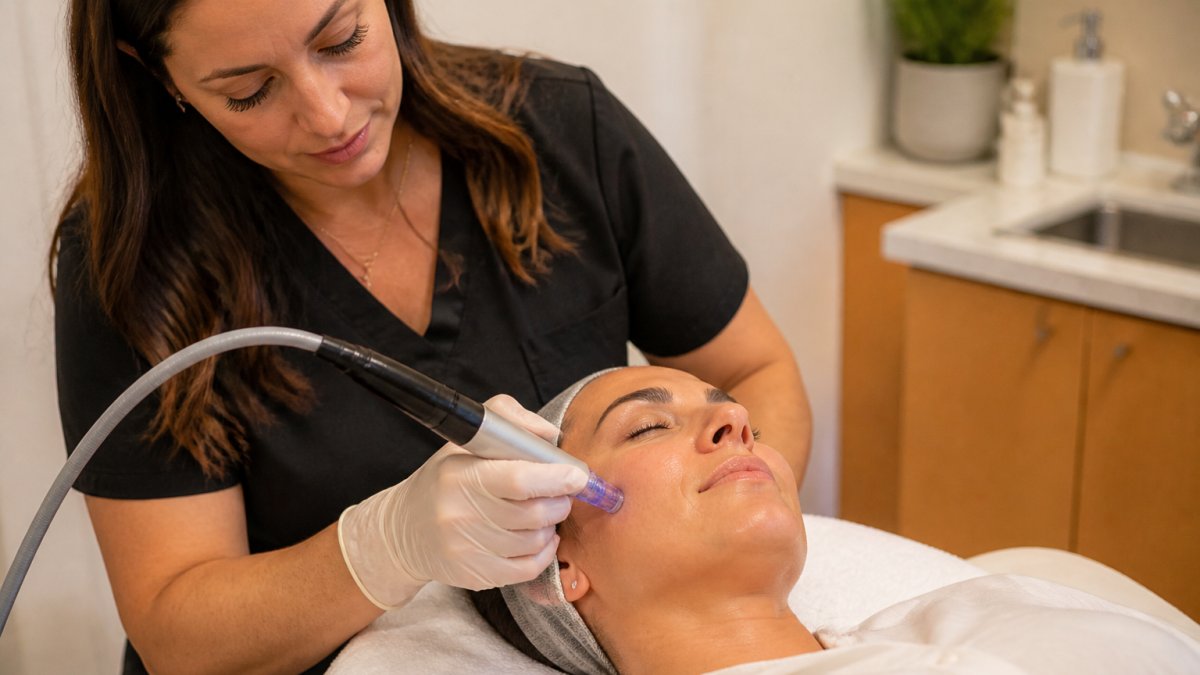
RF microneedling acne scars combines two proven techniques to address acne scarring. The treatment uses tiny needles to create controlled micro-injuries in the skin, triggering your body's natural healing response. At the same time, radiofrequency energy heats the deeper skin layers beneath the surface.
This combination works differently than traditional microneedling alone. The radiofrequency energy stimulates collagen induction therapy, your skin responds by producing new collagen and elastin. These proteins rebuild the structure beneath scarred areas, gradually filling in depressed scars and improving overall skin texture.
How the process works:
- Needles penetrate the skin at precise depths
- Radiofrequency energy delivers heat to the dermis (deeper skin layer)
- Your body initiates wound healing and collagen synthesis
- New collagen gradually remodels scarred tissue over weeks and months
The depth of needle penetration and intensity of radiofrequency energy can be adjusted based on your scar type and skin condition. This customization makes RF microneedling effective for different kinds of acne scarring.
Understanding Scar Types and How RF Microneedling Addresses Them
Not all acne scars look or behave the same way. Understanding your scar type helps explain why RF microneedling works and what results you can realistically expect.
Atrophic scars are indented or depressed, the most common type from acne. These include:
- Ice pick scars: Deep, narrow pits that look like puncture marks
- Boxcar scars: Broader, flat-bottomed depressions with defined edges
- Rolling scars: Wider, shallow depressions that give skin a wavy texture
RF microneedling addresses these by stimulating collagen production beneath the scar. New collagen fills the depression from underneath, gradually raising the scar level closer to surrounding skin. This process takes time, collagen remodeling happens over several months, not immediately.
Hypertrophic or raised scars (less common from acne) respond differently. RF microneedling can help, but these may benefit from additional approaches. During a consultation, we evaluate your specific scars to discuss treatment options.
The type and depth of your scars influence how many sessions you'll need and the timeline for visible improvement. Deeper, more severe scarring typically requires more sessions than mild surface irregularities.
How Many RF Microneedling Sessions for Acne Scars
Most people need a series of RF microneedling acne scars treatments to see meaningful improvement. A typical course involves 3 to 6 sessions spaced 4 to 6 weeks apart, though this varies based on scar severity and your skin's response.
Why multiple sessions work better:
- Each session stimulates collagen production in layers
- Collagen remodeling continues for weeks after each treatment
- Spacing treatments allows your skin to heal fully between sessions
- Cumulative effect: results improve noticeably after the second or third session
After your initial series, some people benefit from maintenance sessions once or twice yearly to continue improving texture.
During your first consultation, we assess your scars and discuss a personalized treatment plan. The number of sessions recommended depends on scar depth, density, and how your skin responds to treatment.
RF Microneedling Results Timeline: What to Expect
Results from RF microneedling unfold gradually. Understanding this timeline helps you set realistic expectations and stay committed to your treatment plan.
Immediate (first 24 hours): Your skin will be red and may feel warm or tender. This is normal and expected.
Week 1-2: Redness fades but may persist in patches. Your skin may feel slightly rough as the healing process continues.
Week 2-4: Skin texture begins improving noticeably. Fine lines and pore size may appear smaller.
Month 2-3: Collagen remodeling accelerates. Atrophic scars gradually become less noticeable as new collagen fills depressions. Skin looks smoother and more even-toned.
Month 3-6: Most significant improvements appear during this window. Scars that were obvious become subtle. Skin texture, tone, and overall appearance continue refining.
Beyond 6 months: Collagen continues reorganizing. Some people see continued gradual improvement up to 12 months after their final session. Results stabilize and plateau.
Patience is essential. RF microneedling results build over time through natural biological processes. Rushing expectations or comparing results week-to-week leads to disappointment.
RF Microneedling Recovery Day by Day
Recovery from RF microneedling is manageable for most people, but the first 72 hours largely determine how smoothly your skin heals.
Day 1 (treatment day): Your skin will be red and may feel warm, tight, or tender, similar to a mild sunburn. Mild swelling is common, especially on the cheeks and jawline.
Day 2-3: Redness typically peaks around day 2-3, then begins to fade. You may notice tiny pinpoint scabs or a rough, sandpaper-like texture, this is the micro-injury channels beginning to close and heal. Do not pick, scrub, or exfoliate.
Day 4-7: Redness noticeably diminishes for most people. Peeling or flaking becomes more apparent as dead surface cells shed naturally. Your skin may feel dry or tight. Keep moisturizing and continue sun protection.
Week 2: Most visible redness has resolved. Mild pinkness may persist in treated areas, especially on the cheeks. Skin continues to shed and renew. Texture improvements may start to become noticeable.
Week 3 and beyond: Skin typically returns to its normal appearance. Healing continues beneath the surface for weeks and months as collagen remodels. You can resume your regular skincare routine and makeup use. Continue daily SPF, it is essential for protecting your results and reducing hyperpigmentation risk.
Most people can return to work or regular activities within 3-5 days. Some redness may be visible, but it is usually mild enough to cover with makeup if needed. If you have a significant event coming up, plan your treatment at least one to two weeks in advance.
RF Microneedling Side Effects and Risk Management
RF microneedling is generally well-tolerated, but like any skin treatment, it carries potential side effects.
Common, expected effects:
- Redness and warmth (typically 24-72 hours, sometimes longer)
- Mild swelling, especially around the eyes and cheeks
- Skin sensitivity and dryness
- Peeling or flaking during healing
- Temporary darkening of already hyperpigmented areas
These effects are part of the normal healing process and resolve on their own.
Less common side effects:
- Prolonged redness lasting beyond 1-2 weeks
- Post-inflammatory hyperpigmentation (temporary darkening of the skin)
- Temporary breakouts as the skin purges
- Infection (rare with proper aftercare)
- Small scabs or crusting at treatment points
Addressing specific patient concerns:
Fat loss: Some patients read online about facial fat loss after energy-based treatments and worry.
Hyperpigmentation in darker skin tones: People with deeper skin tones have a higher risk of post-inflammatory hyperpigmentation after any skin injury, including microneedling.
Risk mitigation:
Avoid sun exposure for at least 1-2 weeks after treatment. UV exposure increases the risk of hyperpigmentation and prolongs redness. Use broad-spectrum SPF 30+ daily during recovery and long-term.
Follow all aftercare instructions carefully. Proper skincare prevents infection and minimizes side effects. Do not use harsh products, active ingredients, or exfoliants during the first week.
Inform us about any medications, supplements, or skin conditions that affect healing.
Avoid RF microneedling if you have active skin infections, severe cystic acne, or certain medical conditions.
A thorough consultation helps you understand your personal risk profile. We assess your skin, review your medications and health history, and create a plan designed to minimize risk while discussing potential results.
Post-Procedure Skincare and Long-Term Maintenance
What you do after RF microneedling treatment is important for supporting healing and maximizing results.
First 48 hours (critical care):
- Use only gentle, fragrance-free cleanser
- Apply prescribed or recommended healing serum or moisturizer
- Avoid all active ingredients (retinol, vitamin C, acids, peptides)
- Skip makeup if possible; if necessary, use clean brushes only
- Do not apply other skincare products
Week 1-2:
- Continue gentle cleansing and moisturizing
- Use broad-spectrum SPF 30+ daily, reapply every 2 hours if outdoors
- Avoid hot water, saunas, and intense exercise that causes sweating
- Do not exfoliate or use scrubs
- Avoid swimming and hot tubs
Week 3 onward:
- Gradually reintroduce your regular skincare routine
- Continue SPF daily, sun protection is essential for scar improvement
- Once skin fully heals (usually 2-3 weeks), gentle exfoliation is okay
- Resume other treatments only after consulting with us
Long-term maintenance:
Consistent sun protection helps prevent new damage and protect your results. Hyperpigmentation risk may decrease with daily SPF use.
Maintain healthy skin habits: hydration, balanced diet, adequate sleep, and stress management support collagen production and skin health.
Some people benefit from maintenance RF microneedling sessions annually or twice yearly to continue improving texture. We can discuss this during follow-up visits.
Is RF Microneedling Right for Your Acne Scars?
RF microneedling works well for many people, but it's not the right choice for everyone. Understanding whether you're a good candidate helps ensure you get the results you're hoping for.
RF microneedling is typically ideal for:
- Atrophic (depressed or indented) acne scars
- People with realistic expectations about gradual improvement
- Those willing to commit to a series of treatments
- People able to protect skin from sun during recovery
- Individuals with generally healthy skin
RF microneedling may not be ideal if you:
- Have active severe cystic acne (treat acne first)
- Are pregnant or breastfeeding
- Have certain medical conditions or take medications affecting healing
- Cannot avoid sun exposure during recovery
- Have unrealistic expectations about immediate dramatic results
- Have very dark skin tones (requires specialized settings to minimize hyperpigmentation risk)
During a consultation, we evaluate:
- Your scar type, depth, and distribution
- Your skin type and sensitivity
- Your healing history and any skin conditions
- Your health history and current medications
- Your expectations and goals
This assessment helps us determine if RF microneedling is right for you or if another approach might be considered. Sometimes combining RF microneedling with other treatments may produce enhanced results.
RF microneedling offers a non-invasive way to improve texture and appearance through your body's natural healing response. The process takes time and commitment to a treatment series, but many people see meaningful improvement in scar appearance and overall skin quality.
At Leon NP Family Health Care, we help patients in the area understand whether RF microneedling fits their goals. We assess your specific scars, discuss realistic timelines and expectations, and create a personalized treatment plan.
Frequently Asked Questions
Can RF microneedling be used to treat acne scars?
Yes. RF microneedling combines fractional radiofrequency energy with microneedling to trigger collagen induction and dermal remodeling. This approach works well for atrophic scars (ice pick, boxcar, and rolling scars) by stimulating the skin's natural healing response and promoting new collagen synthesis. Results develop gradually over weeks and months as the skin rebuilds itself.
When might results from RF microneedling become noticeable?
Most patients see initial improvements in skin texture and a reduction in scar depth within 4-6 weeks as collagen remodeling begins. More significant results typically appear at 8-12 weeks. The full benefit develops over 3-6 months as collagen continues to build. Results continue improving between sessions and after your treatment series is complete.
What are the possible side effects of RF microneedling?
Common side effects include temporary redness, swelling, and mild discomfort during and immediately after treatment. Some patients experience post-inflammatory hyperpigmentation or temporary dryness. These effects are normal and usually resolve within 7-10 days. Serious complications are rare when performed by a qualified provider. Your provider will discuss your individual risk factors during a consultation.
How long can RF microneedling results for acne scars last?
Results are long-lasting because the treatment stimulates your body's own collagen production and tissue remodeling. Many patients maintain results for 1-2 years or longer. Maintenance sessions every 12-18 months can help sustain improvements and address any new skin concerns. Your skin's natural aging process and sun exposure will still occur, so ongoing skincare and sun protection remain important.